Elizabeth Holmes, a new documentary, and the difference between claiming a connection and making one
Lorem ipsum dolor sit amet… You’ve probably seen that line, even if you’ve never known what to call it. It’s lorem ipsum, the dummy text designers pour into a website template, a brochure mock-up or a slide deck to hold the place until someone writes the real words. Think of it as the written version of an AI-generated family photo that comes inside a new picture frame. From a few feet away it has everything that makes text look like text: words of different lengths, commas, sentences that stop where sentences usually stop. Your eye files it under “language” and moves on. Only when you try to read it do you find there’s nothing there.
I’ve had lorem ipsum on my mind since watching You Can See Everything, Nathan Fielder and Lance Oppenheim’s documentary about Elizabeth Holmes, which A24 released in last month.
“I’m engaging with you as a human being”
The film picks up 34 days before Holmes reported to federal prison. Fielder moves into her world. He watches her cook, plays her videos, and keeps asking, in one form or another, whether she’s being straight with him. Her answers are the part I keep coming back to. “I’m engaging with you as a human being,” she tells him. When he asks whether she’s being real right now, she says she’s always being real.
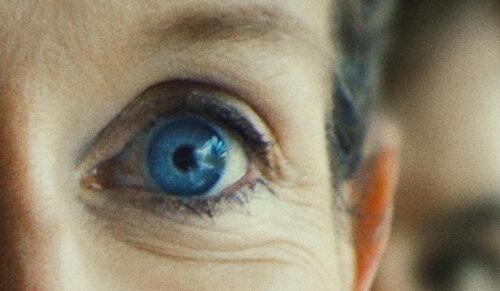
Her claim comes across as the lorem ipsum of human connection: the eye contact, the earnest tone, the right words in the right order, with nothing written inside.
The claim is the tell
If someone in a negotiation says, “I’m going to be honest with you,” it implies they weren’t being honest a moment ago. It’s like saying “trust me.” People who are connecting with you almost never announce it. Connection shows up in timing and give-and-take. You laugh a beat late because the joke took a second to land, you lose your train of thought because of something the other person did with their face, you change your answer halfway through because you saw them wince. Nobody has to declare any of it, because both of you can feel it. When someone narrates the connection instead, they’re telling you what to conclude.
That’s why the claim gives the game away. Perhaps only a robot or robotic person would try to claim to be human. You don’t tell a friend over dinner that you’re engaging with them as a human being. You just do it, and they can tell.
The film catches a quieter version of the same tell. The psychotherapist Elliott Connie noticed that Holmes nods along with her own words as she speaks, then holds the nod while Fielder takes them in, as if steering him toward agreement.
Off the clock, in high fidelity
None of this was hidden. A 2015 Bloomberg profile described Holmes leaning forward in a power pose and dropping her voice an octave or two, and noted that she rarely slips out of character. In a 2023 New York Times profile, Holmes said the actors who portrayed her were playing a character she had created.
So how did so many smart people miss it? Part of the answer is where they were standing. At work, most of us slip into a particular mode. We keep our heads down, stay on task, and quietly accept that everyone around us is acting a little. We call it “acting professional.” I’ve studied this shift for most of my career, and the result of an early experiment still surprises me. People listened to the same recorded conversation about planning an event. Half were told they were overhearing coworkers, the other half friends. Afterward, the “coworkers” group remembered the tasks: the venue, the menu, the agenda. The “friends” group remembered all of that, plus the jokes going back and forth and the moment someone quietly brushed off another person’s idea. Nothing about the conversation changed except the label. Calling it work was enough to make people tune out many of the social cues inside it.
Put a founder’s lowered voice, rehearsed certainty and black turtleneck into that setting and they read as normal, since a little performance is the price of admission for the ideal worker. Missing the cues there is the default. The movie theater is different. Nobody is asking you to sign a term sheet or hit a number, and nothing tells you to look past the performance. So the same cues that slid by in the boardroom come into clear view, in vivid hues of high fidelity: the held nod, the practiced pause, the line about engaging as a human being. Reading the room, sensing what’s really going on between people, suddenly feels effortless, which tells you the capability was there all along.
Lorem ipsum at work
Lorem ipsum is harmless as long as everyone knows it’s a placeholder. Trouble starts when it ships as finished copy, and most workplaces ship a lot of it. “We’re a family here.” “Your feedback matters to us.” “I want to be transparent with you.” “I hear you,” typed while answering three other emails. Each sounds like a human moment, and in traditional work mode we rarely check whether anything is written inside. Now AI tools can turn these out by the thousand. AI slop unnoticed, at least at first glance. Back in June I wrote about the AI-drafted email that says all the right things and means none of them. The tempting defense is more declarations: written by a human, made with care, engaging with you as a human being. Holmes shows how little those are worth. A declaration of humanity is the easiest thing in the world to fake, which makes it a reason to look closer.
What you’re looking for, in a colleague or a message or a founder, is what I call Evidence of Listening: visible proof that someone actually took in what you said. It rarely announces itself. It’s the manager who brings back a worry you mentioned in passing two weeks ago. It’s the teammate who changes the plan halfway through a meeting because they caught the look on a client’s face. It’s the reply that answers the question you actually asked rather than the one that was easier to answer. None of it can be claimed. It has to be done, in real time, with someone there to see it.